
Engineering Tomorrow’s Systems
Pixhawk-standard flight control hardware with a hardware-rooted identity from the factory. Each controller carries its keys in an onboard secure element, ready for secure enrollment in your fleet.
Dominate the skies with the Bear Claw 12s 100A CAN Electronic Speed Controller
Engineered for high-voltage builds and extreme thrust, it delivers the lightning-fast response and thermal efficiency needed for aggressive FPV or heavy-lift missions.
It is manufactured in Estonia, in the European Union.
* Continuous current depends on cooling, connectors and wire gauge.
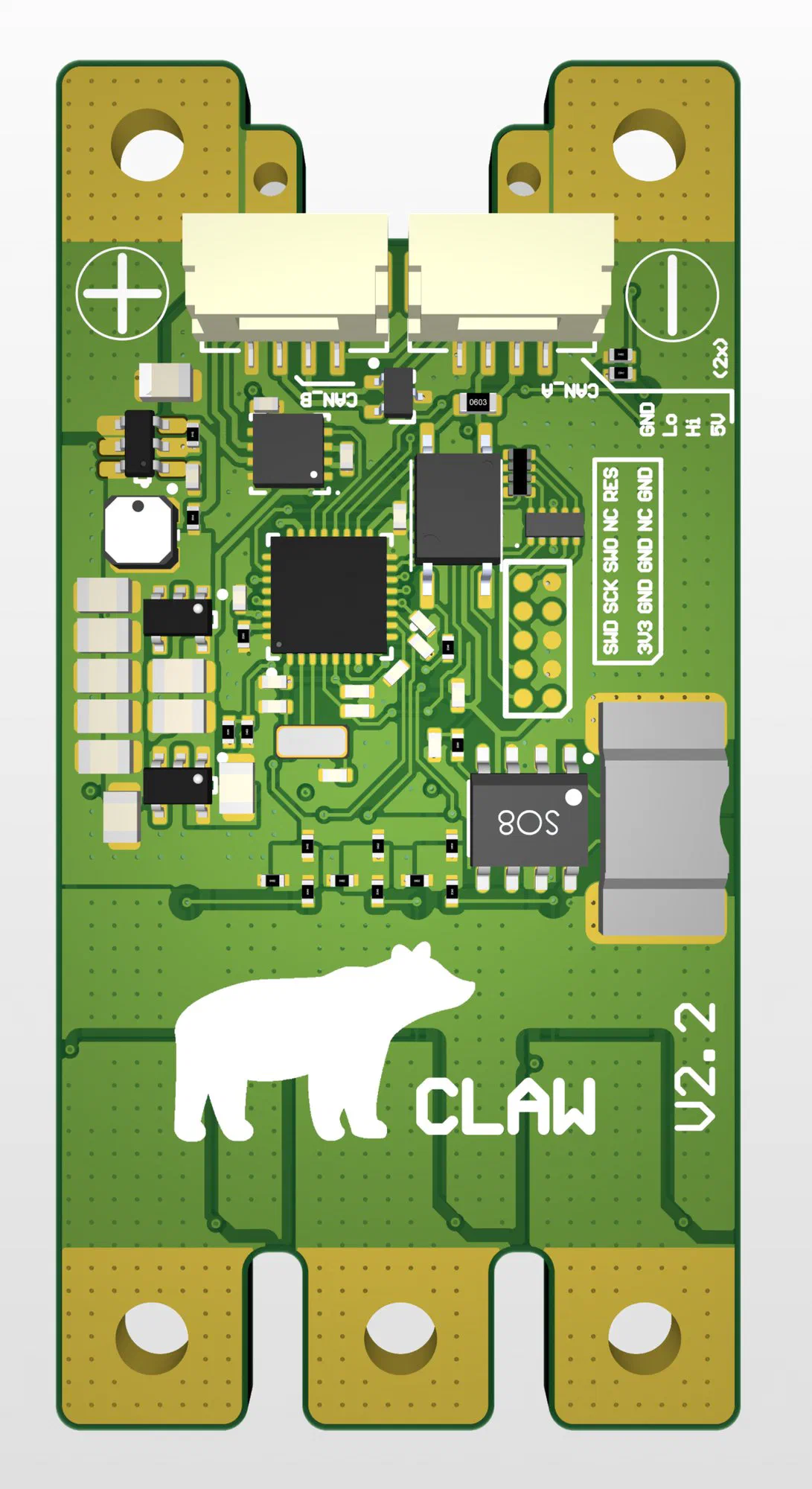
Claw drives one brushless motor sensorlessly, and takes its throttle over DroneCAN, or as DShot or PWM on its signal connector. It runs AM32 firmware on an STM32L431.
The Claw ESC manual covers wiring, the connectors, firmware setup and parameters.
| Component | Specification |
|---|---|
| Continuous current | 100 A |
| Current measurement range | 110 A |
| Operating voltage | 16.3 to 53 V (4S to 12S) |
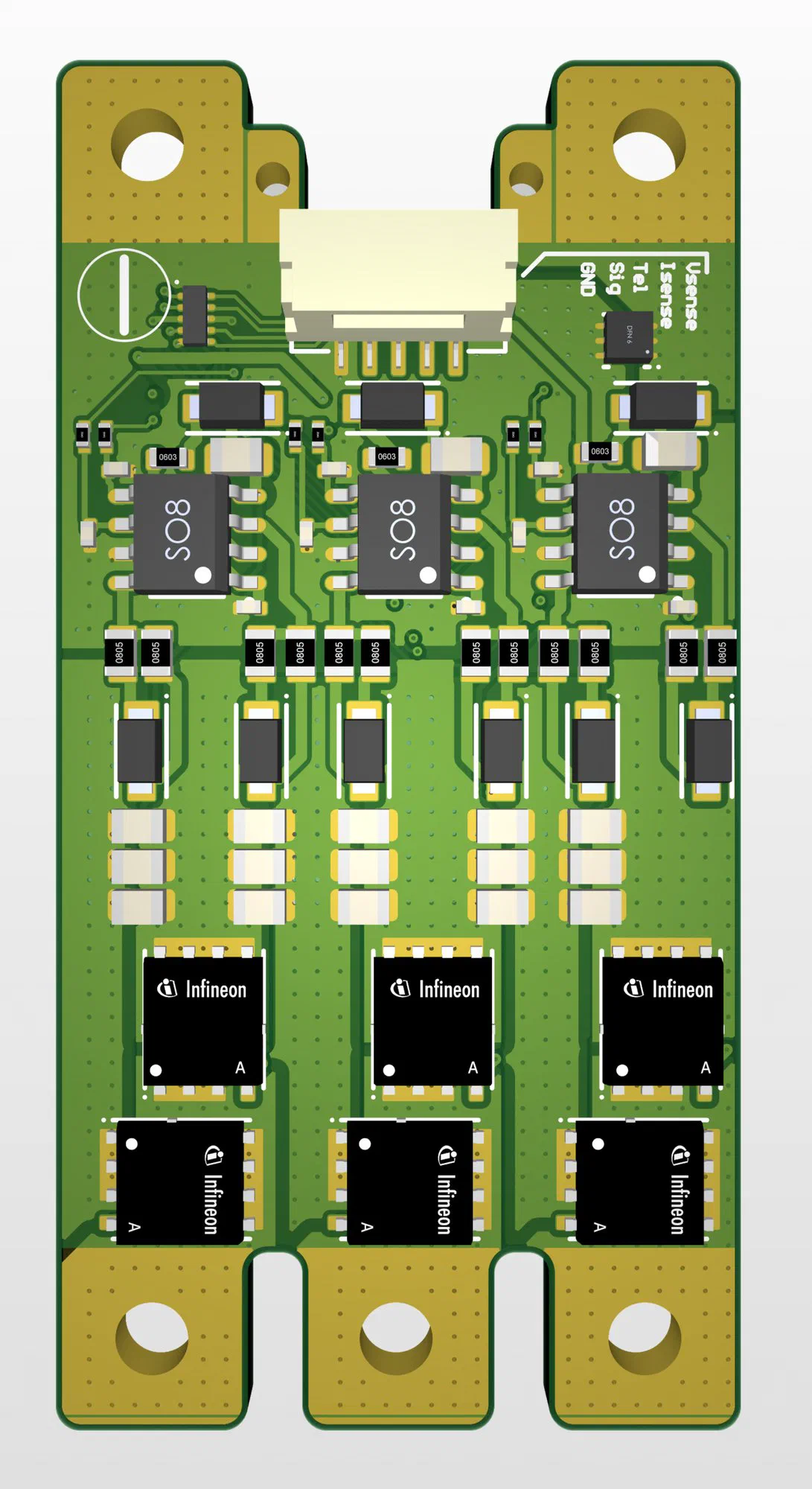
| MOSFETs | Infineon ISC016N08NM8: 80 V, 1.6 mΩ |
| Gate driver | TI UCC27834 |
| Current sense | TI INA240A3 across a 0.3 mΩ shunt |
| Processor | ST STM32L431: Arm Cortex-M4 at 80 MHz |
| Firmware | AM32 2.20 with DroneCAN |
| Bus | DroneCAN at 1 Mbit/s |
CAN_A and CAN_B are the same bus on 4-pin JST GH connectors, so ESCs chain without a hub, and a parameter switches the 120 Ω terminator. Their pin order follows the DS-009 Pixhawk Connector Standard, as the Karu VMU CAN ports do.
The 5-pin signal connector takes DShot or PWM, and returns serial telemetry with analogue battery voltage and current. Pinouts and wiring diagrams are in the Claw ESC manual.